
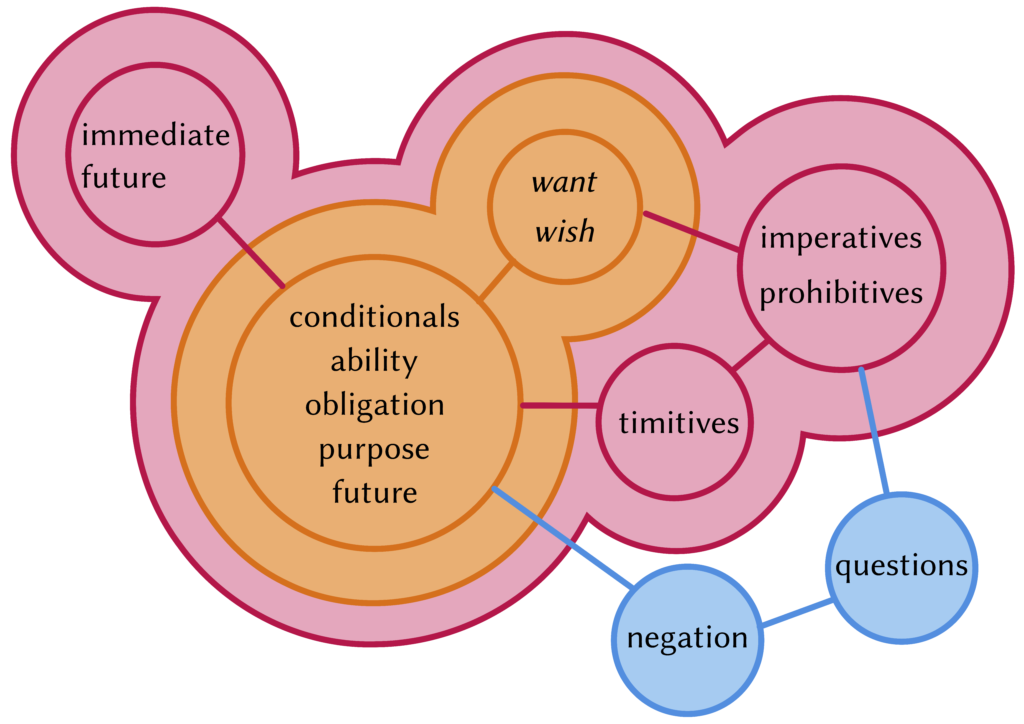
I heard many fantastic talks at this year’s ALT in Pavia and had some very inspiring conversations. The talk I gave was about realis and irrealis in Oceanic and beyond, and you can download the slides here.
Linguist
I heard many fantastic talks at this year’s ALT in Pavia and had some very inspiring conversations. The talk I gave was about realis and irrealis in Oceanic and beyond, and you can download the slides here.
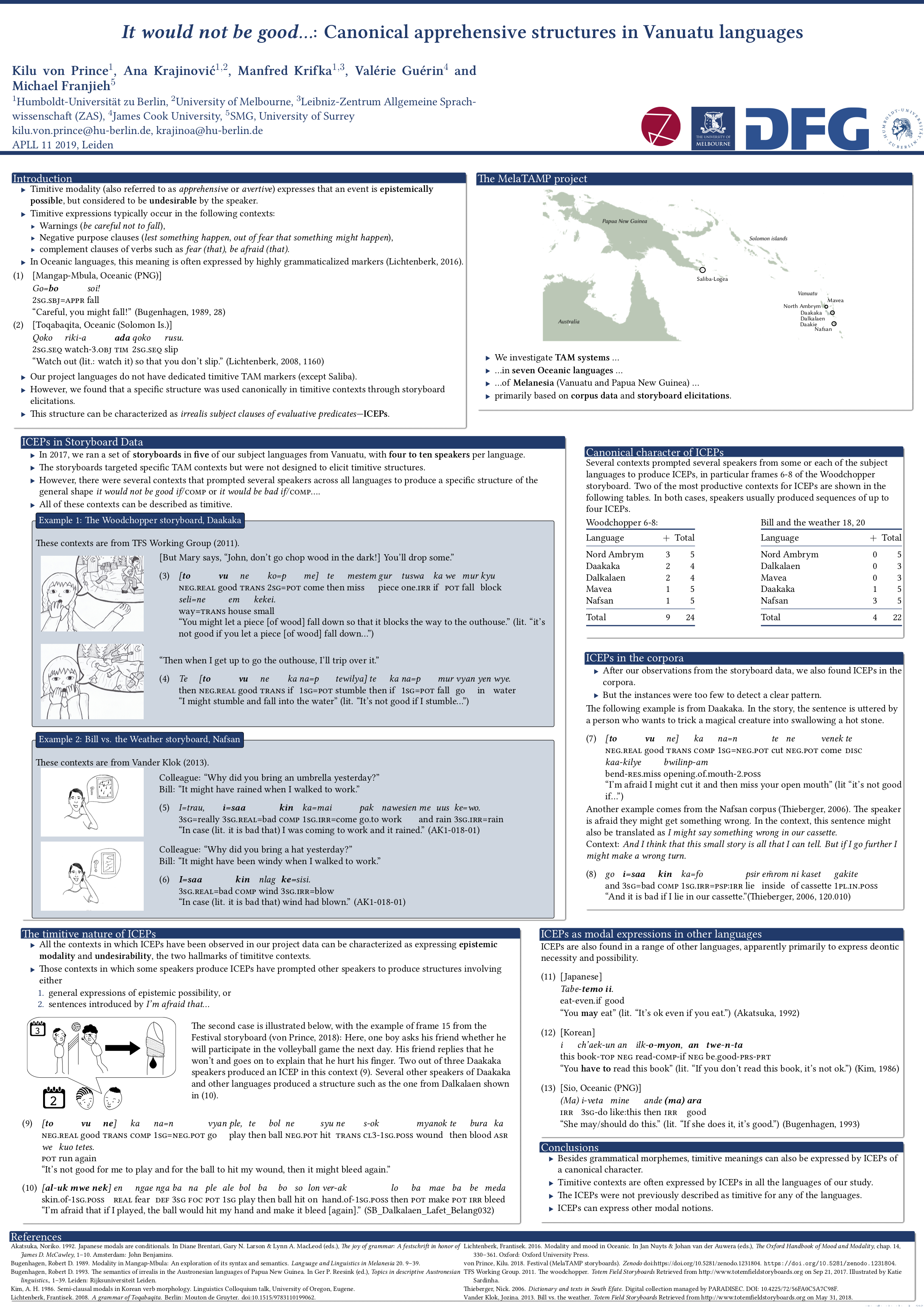 My colleagues Ana Krajinović and Manfred Krifka are currently at APLL in Leiden to present our joint work on timitive structures in Oceanic, which have the shape it’s not good/it’s bad if… . Timitive modality is a category often found in Oceanic, which typically occurs in warnings (Watch out, you might fall!) or negative purpose clauses (You should take an umbrella, lest you get wet!). Download the poster here.
Our project was represented with two papers in this year’s Language and Technology Conference in Poznań. Ana Krajinović presented joined work with colleagues from Vanuatu and Melbourne on community-led language documentation. She won the award for the best student presentation.
Annika Tjuka, in a joined paper with Lena Weißmann and me, presented our tag set for the MelaTAMP corpora with a focus on tagging habitual aspect: the fact that habituality or genericity can be a property of stretches of discourse larger than a sentence makes clause-wise tagging complicated.
I’m currently in Cologne at the small Vielfaltslinguistik Conference (Diversity linguistics). It’s great to see so much new and interesting work on lesser described languages. My own talk, on joined work with Manfred Krifka and Ana Krajinović, focuses on empirical methods in our MelaTAMP project. Our slides can be downloaded here: [download id=”473″].
 For my second talk in Konstanz, I discussed my paper on Counterfactuality and Past in the What-if group. You can download the current manuscript version here: [download id=”362″]. My slides can be found here: [download id=”367″].
 Last week, I had the privilege of giving two talks in Konstanz. In the colloquium of the linguistics department, I talked about our latest research on counterfactual futures in Oceanic and what they tell us about tense and mood in our subject languages. Download the slides here: [download id=”348″]. Read the paper here: [download id=”358″].
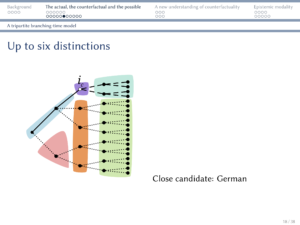 I went to Göttingen last week to talk about modality, which is turning into a pleasant tradition. In my talk, I outlined the typological debate on the irrealis distinction, introduced the tripartite branching-time model that I think will help us the relevant cross-linguistic variation, and discussed how the same approach also sheds new light on some long-standing questions about the nature of modality, counterfactuality and epistemic necessity. You can find the slides here.
There was an interesting small workshop in Torun in April on Measuring Linguistic Complexity. When the call came out, I had just finished a preliminary overview on the previous literature on the topic and was ready to get cracking, so I got together with Vera Demberg to test our hypothesis that focussing on POS tags rather than the token-level annotations would give us more reliable results on syntactic flexibility. Our results are in the proceedings.
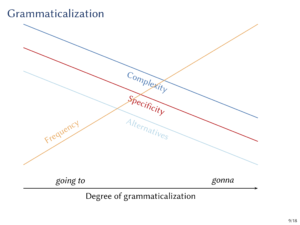 My work in the Collaborative Research Unit on information density (ID) in Saarbrücken has made me think about the relation between grammaticalisation and ID. In an invited talk to Saarbrücken in April, I explored some of my ideas on this topic. You can find the slides here.
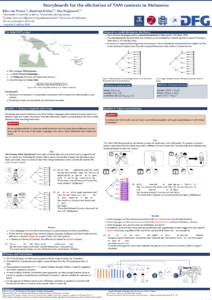 The Linguistic Evidence conference in Tübingen this year is long over and I’m sad I couldn’t be there, but our poster was well represented by my two co-authors, Manfred Krifka and Ana Krajinović. Click here to download the PDF.